
Views: 0 Author: Site Editor Publish Time: 2025-12-09 Origin: Site


Choosing a new kitchen countertop is one of the most significant decisions you will make during a remodel or build. The surface you select impacts the room's aesthetics, your daily maintenance routine, and the overall functionality of your workspace. While materials like granite and quartz often dominate the conversation, a versatile and high-performing option is gaining well-deserved attention: the solid surface countertop.
This guide will explore the unique benefits of choosing a solid surface material for your kitchen. We will cover what makes this material an excellent choice, its advantages over other options, and why a solid surface countertop could be the perfect finishing touch for your home. By understanding the properties of this innovative material, you can make an informed decision for your next kitchen countertop project.
First, let's define what we mean by a solid surface countertop. Unlike natural stone, which is quarried in slabs, a solid surface material is a man-made product. It is typically composed of a blend of acrylic or polyester resins, mineral fillers, and pigments. This mixture is poured into molds to create sheets that can be fabricated into seamless countertops and other shapes.
The result is a non-porous, homogenous material. This means the color and pattern run consistently through the entire thickness of the countertop. This characteristic is a key advantage, as it allows for inconspicuous repairs if the surface ever gets scratched or damaged. A solid surface material offers a unique combination of beauty, durability, and design flexibility that sets it apart from other kitchen countertop choices.

When you begin comparing options for your kitchen, you will find that a solid surface countertop provides a compelling list of benefits. It addresses many of the common drawbacks found in other materials, making it a practical and stylish choice for modern households.
One of the most celebrated features of a solid surface material is its ability to be joined seamlessly. A skilled fabricator can fuse pieces of a solid surface countertop together with a special adhesive, creating joints that are virtually invisible to the naked eye. This allows for long, continuous surfaces and integrated sinks without the dirt-trapping grout lines or gaps found in tile or stone slab installations.
This non-porous and seamless nature makes a solid surface countertop exceptionally hygienic. With no cracks or crevices for bacteria, mold, or mildew to grow, it is an ideal surface for food preparation. Cleaning is simple—just soap and water are usually enough to keep your kitchen countertop looking pristine.
Daily life can be tough on a kitchen countertop. From dropped pans to accidental spills, surfaces need to be resilient. A solid surface material is engineered to withstand the rigors of a busy kitchen. It is impact-resistant and stands up well to everyday wear and tear.
Should your solid surface countertop get a scratch or a small gouge, repairs are surprisingly straightforward. Because the material is solid all the way through, minor damage can often be buffed out with a fine-grit sandpaper and a non-abrasive cleaning pad. This renewability is a significant advantage over materials like laminate, where a deep scratch is permanent, or stone, which requires a professional for refinishing.

A solid surface material opens up a world of creative possibilities. It is available in a vast spectrum of colors, patterns, and finishes, from solid brights to subtle designs that mimic the look of natural stone or concrete. Whether you desire a classic white kitchen countertop or a bold, contemporary statement piece, there is a solid surface option to match your vision.
Furthermore, this material can be thermoformed. When heated, it can be bent and molded into various shapes, allowing for curved islands, integrated backsplashes, and custom design features that are impossible to achieve with other countertop materials. This makes a solid surface material a favorite among architects and designers looking to create a truly unique kitchen space.
To fully appreciate the value of a solid surface countertop, it helps to compare it directly with other common kitchen countertop materials.
Feature |
Solid Surface Countertop |
Granite Countertop |
Laminate Countertop |
|---|---|---|---|
Composition |
Man-made blend of resins, minerals, and pigments. |
Natural igneous stone, quarried from the earth. |
Layers of plastic fused to particleboard. |
Porosity |
Non-porous and hygienic. Does not require sealing. |
Porous and requires regular sealing to prevent stains and bacteria. |
Non-porous surface, but seams and edges are vulnerable to water damage. |
Seams |
Can be fused to create invisible, seamless joints. |
Visible seams are necessary for large installations. |
Visible seams, often with dark lines. |
Repairability |
Scratches and minor damage can be sanded out. |
Chips and cracks require professional repair and can be difficult to hide. |
Damage is typically permanent and cannot be repaired. |
Design Options |
Wide range of colors and patterns. Can be thermoformed into custom shapes. |
Each slab is unique. Limited by what is quarried. |
Wide range of printed patterns. Cannot be shaped. |
This comparison highlights why a solid surface material is often considered the perfect middle-ground. It offers the premium, seamless look that surpasses laminate while providing superior hygiene and repairability compared to natural stone. For many homeowners, a solid surface kitchen countertop provides the ideal balance of performance and aesthetics.
A solid surface countertop is a man-made surfacing product created from a blend of acrylic or polyester resins, mineral fillers, and pigments. This mixture is cast into sheets, resulting in a non-porous, homogenous material where the color and pattern run through its entire thickness. Unlike natural stone, it can be joined seamlessly, allowing for integrated sinks and invisible joints. Its unique composition makes it highly durable, hygienic, and easy to repair, distinguishing it as a versatile choice for any kitchen countertop. The solid surface material can also be thermoformed into custom shapes, offering significant design flexibility.
Caring for your solid surface material is simple and requires minimal effort. For daily cleaning, use a soft cloth with warm water and a gentle, ammonia-free cleaner. Since the surface is non-porous, stains do not penetrate, but it is always best to wipe up spills from liquids like wine, coffee, or juice promptly.
While the material is heat-resistant, you should always use trivets or hot pads for pots and pans directly from the stove or oven. Likewise, use a cutting board for chopping and food prep to avoid scratches. By following these basic care guidelines, you can ensure your solid surface kitchen countertop remains beautiful for many years.
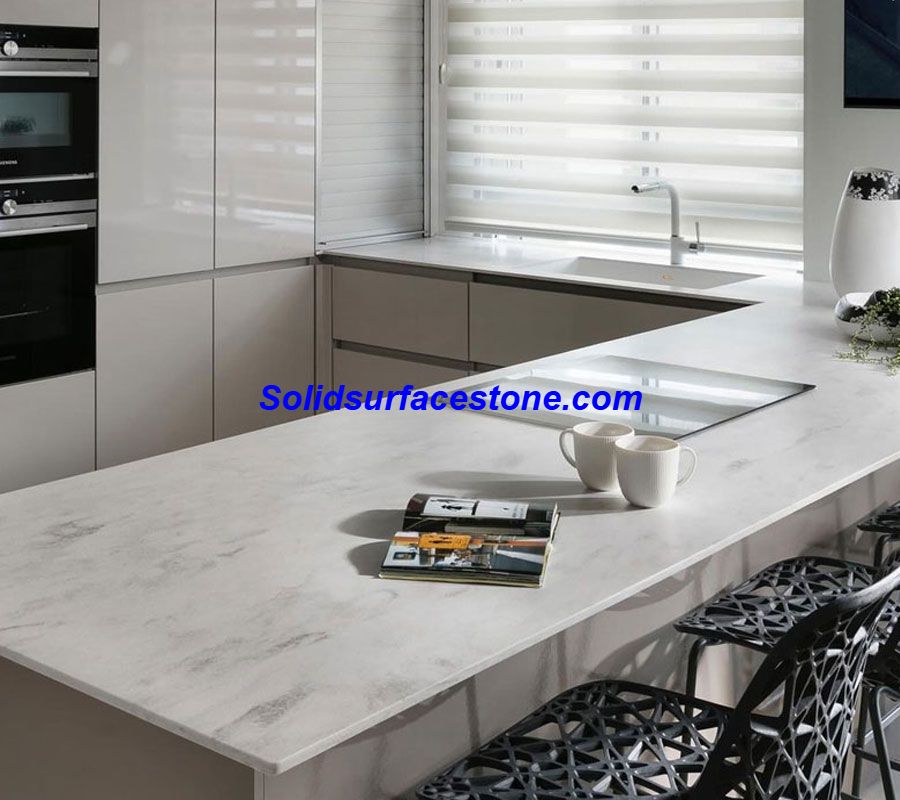
When selecting a solid surface material, you will find options made from either polyester or acrylic resins. While both perform well, "solid surface stone" products are widely considered the superior choice for a kitchen countertop. Acrylic-based countertops offer enhanced durability, better impact resistance, and seamless fabrication. They are also thermoformable, which allows for more creative and custom designs.
If you are looking for a material that combines robust performance with elegant design, solid surface stone is the ultimate solution. It delivers all the benefits of a solid surface countertop—hygiene, repairability, and seamless beauty—with the added strength and versatility of 100% acrylic resins.
For your next project, consider the lasting value and superior quality of a solid surface stone kitchen countertop. It is an investment in a durable, beautiful, and functional workspace that will serve your family for decades.
To learn more about our premium solid surface stone options and to get a quote for your project, please contact us.
Email: sales5@surface-s.com
Phone: +86 18029673238


