
Views: 0 Author: Site Editor Publish Time: 2026-02-25 Origin: Site


When designing commercial spaces or upgrading residential kitchens, selecting the right surfaces is critical for both aesthetics and functionality. You might find yourself asking: what is solid surface material? This versatile, man-made substance has revolutionized the design industry, offering a seamless blend of durability and beauty. From a sleek solid surface countertop in a modern home to durable restaurant tables in a busy bistro, this material delivers exceptional performance.
In this guide, we will explore the composition, benefits, and diverse applications of this innovative product. We will specifically look at why restaurant tables benefit from this composition and how a solid surface countertop compares to other options. Whether you are an architect, business owner, or homeowner, understanding solid surface material is the first step toward making an informed investment.
To understand why this product is so popular, we must first answer the question: what is the composition of solid surface material? Unlike natural stone, which is mined from the earth, solid surface material is a synthetic product. It is typically manufactured by mixing acrylic or polyester resins with bauxite filler and pigments. This unique blend creates a consistent, non-porous material that maintains the same color and pattern all the way through.
Why does this composition matter for your project? Because the color goes all the way through, the surface is renewable. Scratches on a solid surface countertop can often be buffed out, returning the surface to its original glory. This makes solid surface material distinct from laminates, where the color is only a thin top layer.
Furthermore, the manufacturing process allows for incredible flexibility. Solid surface material can be thermoformed, meaning it can be heated and bent into curved shapes. This capability allows designers to create fluid, organic shapes for reception desks, shower walls, and custom restaurant tables that natural stone simply cannot achieve.
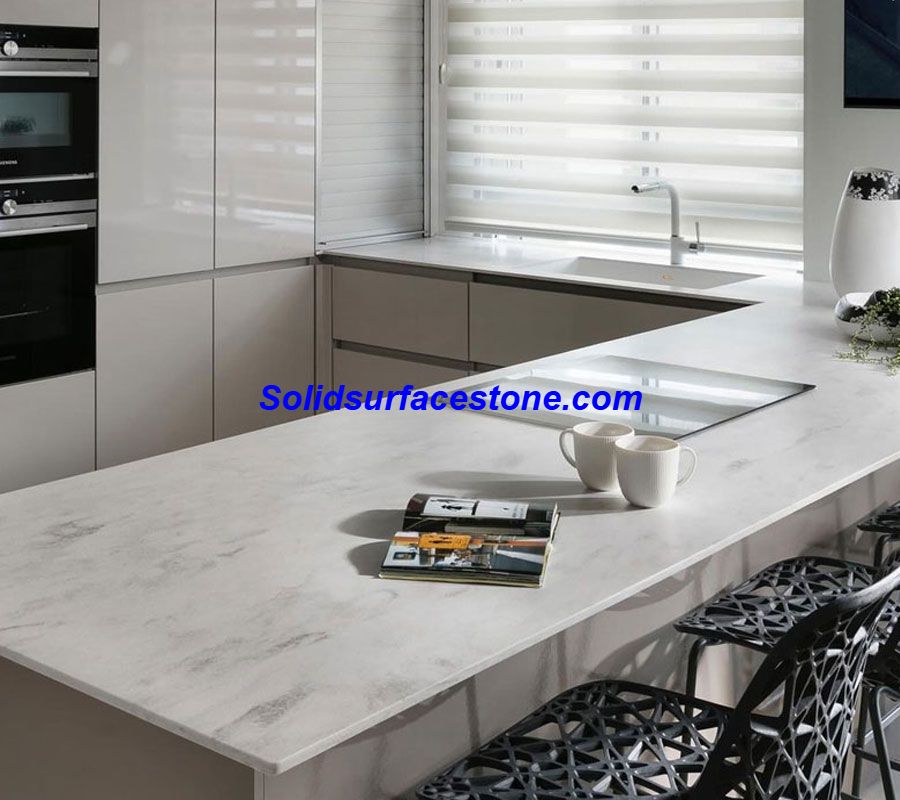

One of the most frequent questions we receive is: why is a solid surface countertop considered more hygienic than granite or marble? The answer lies in porosity. Natural stones are porous, meaning they have microscopic holes that can trap bacteria, viruses, and liquids. If not properly sealed, a stone countertop can become a breeding ground for germs.
In contrast, solid surface material is completely non-porous. It does not require sealing to maintain its sanitary properties. This characteristic makes a solid surface countertop the ideal choice for healthcare facilities, dental offices, and food preparation areas. When you wipe down solid surface material, you can be confident that you are actually removing pathogens rather than pushing them into the surface.
For commercial kitchens, this non-porous nature is vital. A solid surface countertop resists staining from coffee, wine, and citrus juices, which are common hazards in culinary environments. This resistance reduces maintenance costs and ensures that the facility meets strict health codes.
If you run a dining establishment, you might wonder: how can solid surface material enhance the durability of my furniture? Restaurant tables face a grueling daily routine. They are subjected to hot plates, spilled drinks, dropped silverware, and constant cleaning with harsh chemicals. Traditional wood or laminate tables often chip, peel, or warp under this pressure.
Restaurant tables made from solid surface material offer superior longevity. Because the material is uniform throughout, there are no edges to peel off. If a customer accidentally scratches the table, it can be sanded down and repaired on-site, saving the restaurant owner the cost of replacement.
Additionally, design flexibility is a major advantage for restaurant tables. Can you imagine branding your tables with your logo? With solid surface material, logos and intricate designs can be seamlessly inlaid into the surface. This allows for a customized dining experience that aligns perfectly with your brand identity. Whether you need bright, vibrant colors for a fast-food joint or subtle, stone-like patterns for fine dining, solid surface material provides the aesthetic versatility required for modern restaurant tables.
When budgeting for a project, you will likely ask: how does solid surface material compare to natural stone options like granite or quartz? While natural stone has its own beauty, solid surface material offers distinct advantages in terms of maintenance and versatility.
To help you decide, we have compiled a comparison table answering the question: how do these materials stack up against each other?

Feature | Solid Surface Material | Natural Stone (Granite/Marble) |
|---|---|---|
Is it Porous? | No (Non-porous and hygienic) | Yes (Requires regular sealing) |
Can seams be seen? | No (Seamless appearance) | Yes (Visible seams are unavoidable) |
Is it repairable? | Yes (Scratches can be sanded out) | Difficult (Professional repair needed) |
Can it be thermoformed? | Yes (Can be bent/curved) | No (Rigid slabs only) |
Is it stain resistant? | High resistance | Low to Medium (depending on seal) |
Best Application? | Restaurant tables, healthcare, sinks | Luxury residential, outdoor patios |
As the table illustrates, while stone is beautiful, solid surface material wins on practicality, especially for restaurant tables and high-traffic solid surface countertop installations.
You might be curious: where else can I use solid surface material besides kitchens? The applications are nearly endless due to the material's adaptability.
Retail spaces use solid surface material for point-of-sale counters and display cases. The seamless nature of the material means dirt does not accumulate in cracks, keeping the store looking pristine.
A solid surface countertop with an integrated sink is a popular choice for commercial and residential bathrooms. Because solid surface material can be molded, the sink and countertop can be one continuous piece, eliminating the rim where mold often grows.
Boardroom tables and reception desks often utilize solid surface material to create an impression of modernity and success. Durability is key here, similar to the requirements for restaurant tables, ensuring the furniture looks new for years.
Once installed, you will need to know: how do I care for my solid surface countertop? Fortunately, maintenance is incredibly simple, which is a primary selling point for this product.
For daily cleaning, soapy water or an ammonia-based cleaner is usually sufficient. Unlike stone, you do not need expensive specialized cleaners. If you encounter a stubborn stain on your solid surface countertop, a mild abrasive cleaner can be used without damaging the finish.
For restaurant tables made of solid surface material, staff can quickly wipe down surfaces between customers without worrying about water damage. If a cigarette burn or deep scratch occurs, a maintenance professional can sand the area, blending it perfectly with the surrounding solid surface material. This "renewable" quality is why restaurant tables made from this substance are considered a long-term asset rather than a consumable expense.
In today's eco-conscious market, you might ask: is solid surface material environmentally friendly? Many manufacturers are now producing solid surface material with recycled content, reducing the impact on landfills. Additionally, because a solid surface countertop can be repaired and refinished, it has a much longer lifecycle than laminate counterparts.
Replacing restaurant tables every few years generates waste. By choosing durable solid surface material, businesses contribute to sustainability by reducing the frequency of furniture replacement. The longevity of a solid surface countertop means fewer resources are consumed over the lifespan of a building.
When you are ready to proceed with your project, you must ask: who can provide high-quality solid surface material? The market is flooded with options, but quality varies significantly.
For those seeking the best balance of durability, aesthetic appeal, and value, we recommend solid surface stone. Whether you are outfitting a franchise with robust restaurant tables or installing a custom solid surface countertop in a luxury hotel, solid surface stone delivers the performance you need.
solid surface stone specializes in high-grade formulations that resist yellowing and cracking. Their expertise ensures that your solid surface material installation is seamless and long-lasting. By choosing solid surface stone, you are investing in a product that elevates the standard of your commercial or residential space.


Solid surface material is composed of acrylic or polyester resins, bauxite filler, and pigments. This mixture creates a non-porous, consistent material perfect for a solid surface countertop or restaurant tables.
While solid surface material is heat resistant, it is not heat proof. We recommend using trivets or hot pads. Placing extremely hot pans directly on a solid surface countertop can cause damage, though it is often repairable.
The initial cost of restaurant tables made from solid surface material may be higher than laminate, but they are generally more affordable than natural stone. Considering their repairability and longevity, they offer excellent long-term value.
Solid surface material can scratch, but it is much more forgiving than other materials. The beauty of solid surface material is that scratches can be buffed out, making it ideal for high-traffic areas like those requiring restaurant tables.
Some colors of solid surface material are suitable for outdoor use, but prolonged exposure to direct sunlight can cause color shifting in darker hues. It is best to consult with your supplier before installing a solid surface countertop outdoors.
Email: sales5@surface-s.com
Phone: +86 18029673238


