Views: 0 Author: Site Editor Publish Time: 2026-05-13 Origin: Site


Meta Title: Solid Surface Fabrication Guide: Cutting, Milling, Thermoforming Tools & Best PracticesMeta Description: Complete solid surface machining guide covering cutting, CNC milling, edge routing, thermoforming, tool selection, speed feeds, safety and troubleshooting for countertop & architectural fabricators.H1: Solid Surface Fabrication Tool Guide: From Cutting, Milling to ThermoformingTarget Keywords (naturally distributed): solid surface fabrication, solid surface cutting tools, solid surface router bits, CNC milling solid surface, solid surface thermoforming, acrylic solid surface machining, solid surface countertop fabrication, solid surface bending
Internal note for SEO: add table of contents, alt text for images, FAQ section, outbound links to material spec sheets, schema Article / HowTo.
What Is Solid Surface (Acrylic Solid Surface)?
Critical Safety Rules Before Fabrication
Solid Surface Cutting: Tools, Blades & Techniques
Milling & Edge Routing: Router Bits, CNC Settings & Profiles
Solid Surface Thermoforming: Heating, Molds & Bending Process
Post-Processing: Sanding, Polishing & Seam Joining
Common Fabrication Mistakes & Troubleshooting
FAQ for Solid Surface Machining
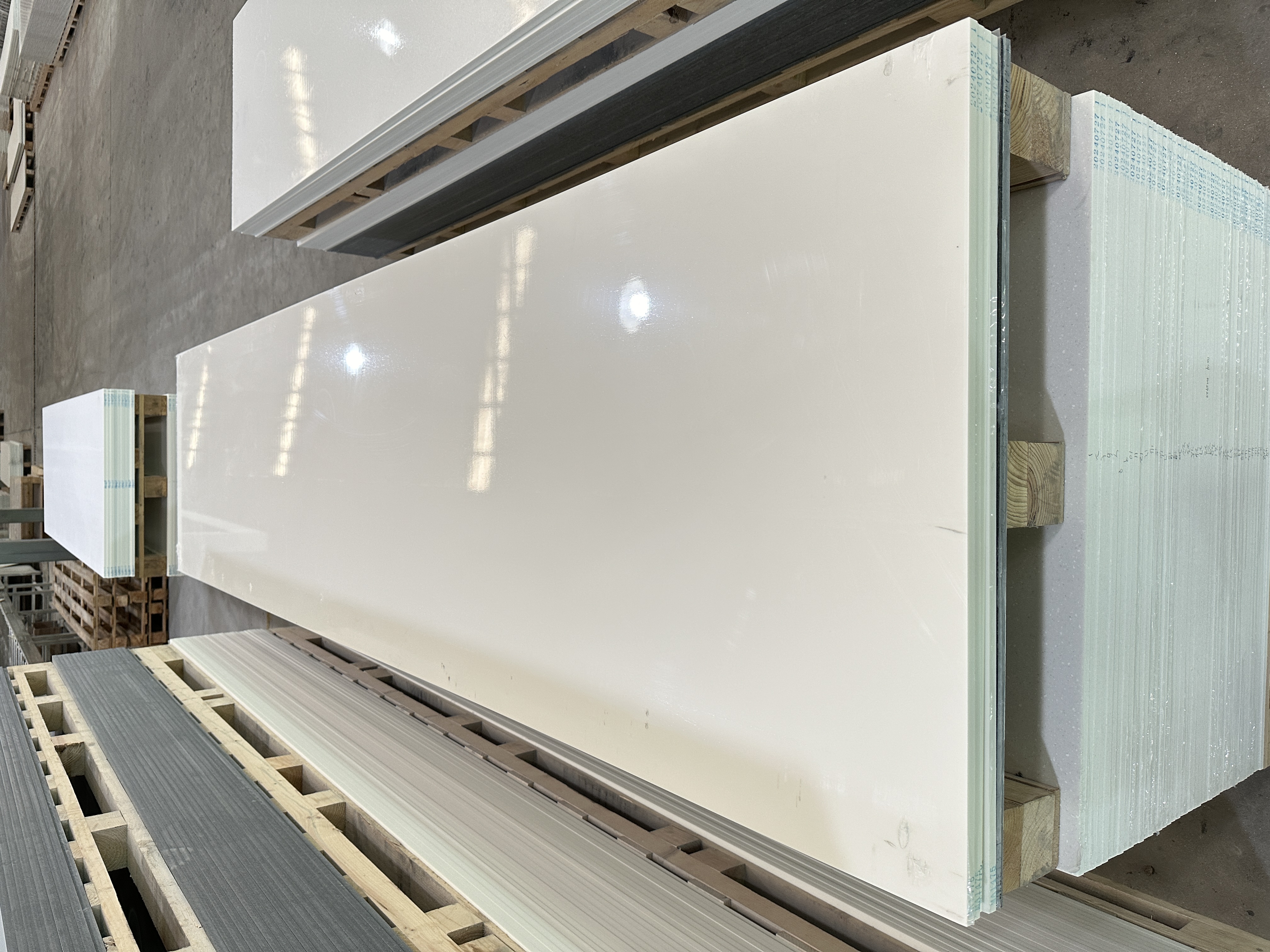
Solid surface (often called acrylic solid surface) is a non-porous composite material made of alumina trihydrate (ATH) filler, acrylic resin, pigments and additives. It is widely used for kitchen countertops, vanity tops, wall panels, shower trays, reception desks and curved architectural elements.
Unlike natural stone, solid surface is thermoplastic when heated within the correct temperature window. This unique property allows seamless jointing, custom edge profiling and thermoforming into smooth curved shapes. However, it is sensitive to excessive heat during cutting and routing — overheating causes melting, resin smearing, discoloration and micro-cracks.
Keyword note: acrylic solid surface sheets, seamless solid surface countertop
Solid surface dust contains mineral filler and resin particles. Poor dust control creates respiratory risks for fabricators. Follow these mandatory rules for every machining stage:
Wear N95 / P100 respirator, safety glasses, hearing protection and nitrile gloves
Use HEPA dust extraction connected directly to saws, routers and CNC spindles; wet cutting is recommended where possible
Keep work area well ventilated; avoid dry sanding without dust collection
Unplug power tools when changing blades or bits; secure workpieces with clamps
For thermoforming: use temperature-controlled ovens; wear heat-resistant gloves when handling hot sheets
Store solid surface sheets flat, supported evenly, to prevent warping before processing
Cutting is the first step to size solid surface sheets. The goal is clean, chip-free edges with minimal heat buildup. The right blade and speed are far more important than raw power.
Table Saw / Circular Saw (Straight Long Cuts) Blade type: Carbide-tipped triple-chip grind (TCG) blade, 80–100 teeth Tip: Feed slowly, let the blade cut rather than forcing the sheet. For production shops, use wet saw attachments to suppress dust and cool the cut line.
Jigsaw / Reciprocating Saw (Curved Cuts, Sink Cutouts) Blade: Fine-tooth bi-metal or carbide jigsaw blades. Always drill a pilot hole before starting internal cutouts. Jigsaws leave rougher edges and require extra sanding afterward.
Band Saw (Thick Stock, Gentle Curves) Good for low-heat curved cuts on 12mm, 19mm solid surface slabs. Choose wide, sharp carbide bandsaw blades.
CNC Router / CNC Cut (High-volume precision nesting) Single-flute upcut spiral carbide bits work best for sheet nesting. Air blast cooling is required to clear chips and reduce melting.
Laser Cutting (Not Recommended for Standard Solid Surface) Laser generates extreme localized heat. It burns resin, leaves sticky charred edges and releases harmful fumes. Reserve laser only for special formulated solid surface grades approved by the material manufacturer.
✅ Support the sheet fully; overhang causes chipping at exit side ✅ Keep protective PE film on during cutting to prevent surface scratches ✅ Remove melted resin buildup from blades regularly ✅ Do not rush cuts — heat damage is the #1 cutting failure
Related keyword: solid surface sink cutout tools
Milling (hand routing + CNC milling) is where solid surface gets its finished shape: bullnose, half-round, bevel, ogee, cove, drain grooves and seamless joint preparation. Heat control is everything here.
| Bit Type | Use Case | Notes |
|---|---|---|
| Single-flute spiral upcut carbide | CNC roughing, sheet profiling | Superior chip evacuation, lowest heat |
| Bearing-guided profile bits (bullnose, bevel) | Hand router edge finishing | For standard countertop edges |
| Compression spiral bits | Finishing passes on CNC | Reduces top-side chipping |
| Straight carbide flush trim bits | Seam trimming, flush joints | Light cuts only |
Avoid standard wood multi-flute bits: they trap chips, overheat and smear acrylic resin across the edge.
Spindle speed: 18,000 – 24,000 RPM
Feed rate: 1.8 – 3.6 m/min
Depth of cut: Light passes, 2–4mm per pass (do not hog deep in one cut)
Cooling: Compressed air blast at cutting zone; dust extraction always on
Finish pass: Reduce feed rate slightly for satin-ready edges
Half bullnose (most common for countertops)
Full bullnose
45° bevel
Ogee edge
Cove edge for shower niches
Flat eased edge (simple commercial tops)
For invisible seams, mill matching joint edges with a dedicated glue-joint bit. Joint surfaces must be flat, dust-free and perfectly mated before applying solid surface adhesive.
Keyword: solid surface edge router bits, CNC solid surface machining
Thermoforming turns flat solid surface sheets into curved panels, rounded corners, curved vanities, shower walls and free-form shapes. This is what separates solid surface from quartz and granite.
Standard acrylic solid surface softens at 160°C – 175°C (320–345°F). Below this range, the sheet stays rigid and cracks when bent; above 180°C, resin degrades, bubbles, discolors or develops permanent internal stress. Heating must be uniform across the bending zone.
Temperature-controlled convection oven (infrared strip heaters for local line bending)
Mold / form block (MDF, plywood, solid wood, covered with felt or flock to avoid marks)
Clamps, vacuum frame (vacuum forming for complex 3D shapes)
Heat-resistant gloves, thermocouple probe
Design & Mold Making Calculate minimum bend radius. General rule: minimum radius = 2× sheet thickness for most acrylic solid surface. Tighter radii will crack. Cover mold surfaces with felt to prevent shiny pressure marks.
Prep Sheet Keep protective film; remove dust and grease. Mask areas that do not require heating.
Controlled Heating Place sheet evenly in oven. Monitor surface temperature with a contact thermometer. Rotate sheet if hot spots appear. Never rush heating.
Form Immediately Once target temperature is reached, transfer quickly to the mold, clamp or apply vacuum. Form gently — compress the material, avoid stretching it. Stretching creates thin weak spots and delayed cracking.
Cool Fully Before Demolding Leave clamped until it cools back to room temperature. Releasing too early causes spring-back and stress cracks. Cooling time depends on sheet thickness.
Trim & Finish After cooling, trim excess material with saw or router, sand and polish the curved edge.
Line bending (strip heaters): Simple single-radius bends, low setup cost for small shops
Oven drape / vacuum forming: Complex 2D and shallow 3D curved parts for architectural projects
Keyword: solid surface thermoforming temperature, bend solid surface acrylic sheet
Machined and formed solid surface edges are not ready for installation directly. Progressive sanding creates a uniform matte, satin or high-gloss finish.
Sanding sequence (dry or wet): 120 → 240 → 400 → 800 → 1500 grit
Polishing: Use solid surface polishing compounds and wool / foam buff pads for gloss finish
Seam joining: Clean joints, apply color-matched two-part solid surface adhesive, clamp firmly, scrape flush after cure, then sand and polish to hide the line
Tip: Match sanding direction on both sides of a seam to avoid visible texture differences.
| Problem | Root Cause | Fix |
|---|---|---|
| Smeary, melted resin on cut / routed edges | Too slow feed, dull bit, insufficient chip removal | Sharpen or change bit, increase feed, add air cooling |
| Edge chipping on exit | No sheet support, dull blade | Support slab fully, use new TCG blade, reduce feed |
| Thermoform cracking | Too cold, radius too tight, stretched while forming | Raise uniform temp, increase bend radius, compress not stretch |
| Spring back after bending | Removed from mold before full cooling | Keep clamped until fully cool |
| Visible seam line | Poor joint fit, dust on glue surface | Mill matching joint faces, clean with isopropyl alcohol |
| Dark discoloration on surface | Overheating during routing / cutting | Lighter passes, better dust & air cooling |
A: Not recommended. Standard wood blades cause excessive heat, chipping and resin melting. Always use TCG carbide blades for solid surface.
A: Engineered quartz cannot be heat-bent. Only acrylic-based solid surface supports thermoforming. Polyester solid surface grades have narrower forming windows and are less forgiving.
A: Repeated heating builds internal stress. Re-forming is possible only for gentle shapes; multiple heat cycles increase crack risk.
A: Compressed air cooling is the industry standard for CNC. Wet machining works but requires drying before gluing.
A: Bearing-guided single-flute profile bits are the easiest starting point for hand-routed countertop edges.
Solid surface’s biggest advantage is design flexibility, but consistent results depend on matching the right tool, cutting speed and temperature control to your material grade. Whether you run a small countertop shop or a high-volume CNC fabrication factory, mastering cutting, milling and thermoforming unlocks curved, seamless solid surface products that natural stone cannot replicate. Always refer to your solid surface supplier’s official fabrication bulletin for brand-specific temperature and tool updates.
Image alt text examples
alt="Carbide TCG saw blade for solid surface cutting"
alt="CNC router bit set for solid surface milling and edge profiling"
alt="Solid surface thermoforming mold and curved finished panel"
Internal link suggestions: link to your solid surface sheet product page, edge profile gallery, custom fabrication service page
Schema: Add HowTo schema for the thermoforming workflow
Anchor text ideas for backlinks: acrylic solid surface fabrication guide, solid surface bending instructions